
The Wide That Wasn't: Inside India's Two-Run Win Over Japan
A last-over review of a wide call swung the finish India's way in a nail-biting two-run victory
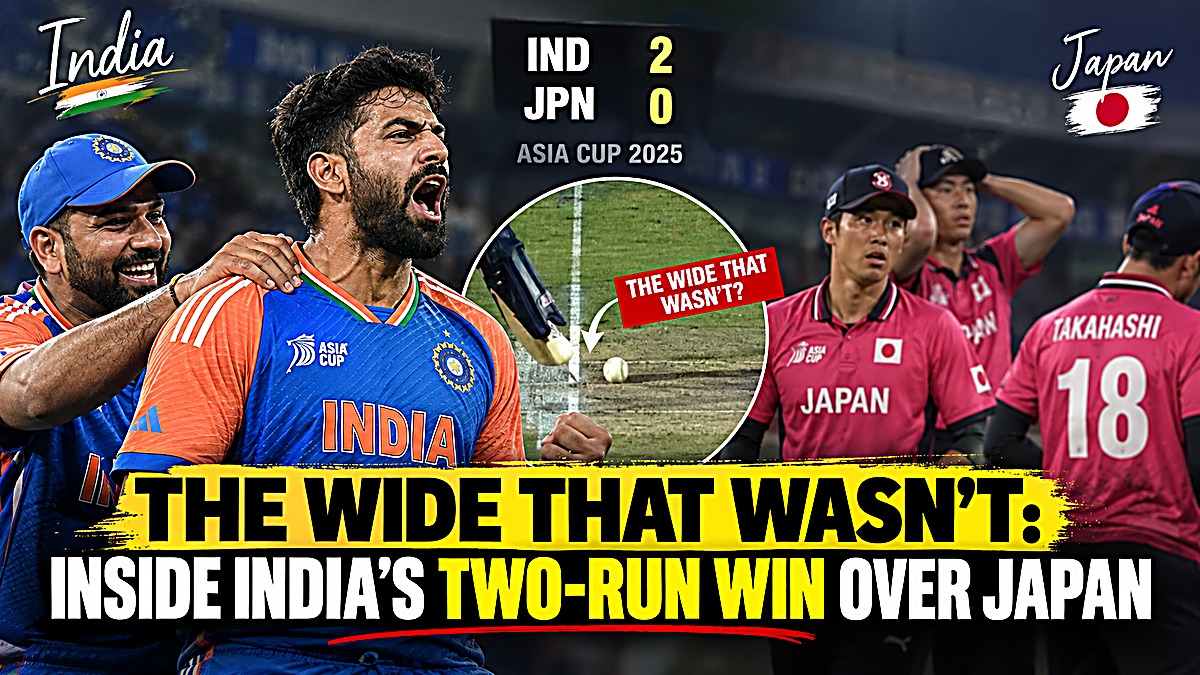
A Finish Decided By Millimetres
Few things test the nerve of players and umpires alike quite like a last-over finish, and India's two-run win over Japan produced exactly that kind of tension. With the match hanging by a thread, an umpire's signal for a wide became the flashpoint of the contest, only for India's protest to be upheld and the call overturned.
In a game already stretched to its limits, that single decision proved decisive. India held their nerve to close out the win by the narrowest of margins, but the story of the finish was as much about the process behind the decision as the result itself.
The Wide That Wasn't
According to the original report, the flashpoint came in the final over, with Japan chasing a target that had been whittled down to a handful of runs. A delivery was signalled as a wide, a call that would have handed Japan extra runs and closed the gap further at the most critical stage of the match. India's players immediately made their feelings known, believing the delivery had, in fact, been legitimate.
After the protest, the decision was reconsidered and the wide was overturned. That reversal effectively preserved India's cushion at exactly the moment Japan were pushing hardest for the win, and it proved to be the difference between the two sides. India eventually got over the line by two runs, a margin so slender that the overturned wide could easily be pointed to as the pivotal moment of the innings.
Why The Call Mattered So Much
In matches decided by such fine margins, every extra ball and every extra run carries outsized weight in the death overs. A wide not only adds a run to the total but also gifts the batting side an additional delivery to work with, both of which can be the difference between a team falling short and getting home. That is precisely what made this passage of play so significant: reversing the call meant Japan lost both the free run and the extra ball, tightening the equation right back in India's favour.
It is a reminder of how thin the margins are in franchise and international cricket at the death, where a single umpiring decision, reviewed and corrected in real time, can decide the outcome of a match outright. For India, the ability to make their case and have it heard, rather than simply accept the initial call, was crucial to protecting the position they had fought hard to build over the course of the innings.
The Bigger Picture
Episodes like this inevitably invite scrutiny of how contentious calls are handled in the heat of a tight finish, particularly when the initial signal and the eventual outcome diverge so sharply. For India, the correct call, arrived at after protest, was the one that ultimately sealed victory. For Japan, playing India in what would have been a landmark result, the reversal will sting all the more given how close they came.
Ultimately, the result stood: India won by two runs, with the overturned wide standing out as the single most talked-about moment of the finish.
Frequently Asked Questions
What happened with the wide call in the India vs Japan match?
A wide was initially signalled in the final over, but after India protested, the decision was overturned, denying Japan an extra run and delivery at a crucial stage.
By how many runs did India win?
India won the match by two runs, a margin decided largely by the overturned wide call in the final over.
Why was the overturned call so significant?
In a match decided by such a slim margin, the reversal denied Japan both an extra run and an extra ball at the death, directly influencing the final outcome.
More From CricketKeeda

Dickwella Returns to Sri Lanka T20I Fold for Asian Games After Two-Year Absence
Niroshan Dickwella has been named in Sri Lanka's T20I squad for the Asian Games, marking his first selection since 2021. The 15-member squad, led by Arachchige, sees most of the country's first-choice T20I stars rested.
Read Story

Kushagra, Kotian Fifties Rescue India A From 97 for 5
India A were reduced to 97 for 5 after Corey Rochhiccioli claimed three quick wickets, but half-centuries from Kushagra and Kotian helped the side recover through a vital 138-run partnership. The stand shifted the momentum back in India A's favour after a shaky start to the innings.